
If you are asking should you file bankruptcy in Texas, your financial situation may already feel overwhelming. Many Texans delay seeking help because they fear losing property or damaging their credit forever.
Unfortunately, waiting too long often creates larger financial problems that become harder to manage. Missed payments, lawsuits, and collection calls usually increase over time. Taking action early may help you protect your income, assets, and peace of mind before the situation becomes more severe.
Understanding available legal options can help you regain financial stability through debt relief Texas solutions that fit your circumstances.
Financial Problems Often Build Gradually
Many people do not recognize serious financial trouble until they fall behind on several bills. Credit card balances may rise slowly at first, then quickly become unmanageable.
Some individuals begin relying on loans to cover groceries, rent, or utility expenses. Others start missing mortgage or vehicle payments because their income no longer covers basic obligations.
These patterns often signal deeper financial instability that should not be ignored. Constant creditor harassment can also create emotional stress and affect relationships, work performance, and overall health.
Learning the most common bankruptcy warning signs may help you avoid additional financial damage later.
Debt Can Reach a Point Where Budgeting No Longer Works
Some financial situations cannot realistically improve through budgeting alone. Interest charges and penalties may continue growing even when monthly payments are made consistently.
Many people make minimum payments without significantly reducing their balances. Others withdraw retirement savings or borrow from family members to survive each month. These short-term solutions often create larger problems later.
Wage garnishments and foreclosure threats can also place enormous pressure on households already struggling financially. Seeking professional guidance early may help you understand available options for overwhelming debt help before creditors take more aggressive legal action against you.
Understanding Your Bankruptcy Options in Texas
Texas residents commonly file either Chapter 7 or Chapter 13 bankruptcy, depending on income, debts, and financial goals. Chapter 7 bankruptcy may eliminate many unsecured debts, including medical bills and credit card balances.
This option often works best for individuals with limited disposable income. Chapter 13 bankruptcy creates a repayment plan that allows individuals to catch up on missed mortgage or car payments over time.
Understanding the differences between these filings is essential when evaluating Chapter 7 vs Chapter 13 Texas bankruptcy solutions.
Local Legal Experience Can Make a Difference
Bankruptcy cases involve detailed paperwork, deadlines, and court procedures that require careful attention. Filing errors may delay your case or reduce certain legal protections available under Texas law. Working with an experienced local attorney can make the process more manageable and less stressful. A lawyer familiar with Smith County courts understands how local trustees and judges typically handle bankruptcy matters.
This knowledge may help strengthen your overall legal strategy. Personalized guidance also ensures your financial goals remain the focus throughout the process. Speaking with a knowledgeable Tyler bankruptcy attorney can provide clarity during difficult financial circumstances.
Seeking Legal Guidance Early May Protect Your Future
Many people wait too long before speaking with a bankruptcy lawyer because they fear judgment or uncertainty. However, bankruptcy laws exist to help individuals recover from financial hardship and regain stability.
A professional case evaluation can explain your rights and identify solutions that match your situation. Bankruptcy may stop foreclosure proceedings, collection lawsuits, repossessions, and wage garnishments through the automatic stay process. Every case involves unique financial factors that deserve careful review.
Scheduling a professional bankruptcy consultation Texas residents may help you make informed decisions about your financial future before conditions worsen further.
Take the First Step Toward Financial Relief
Financial stress can affect every part of your daily life, including your health, relationships, and future plans. Many individuals feel trapped because they believe there are no realistic solutions available.
However, bankruptcy protections exist to provide legal relief and create opportunities for financial recovery. Taking action early may help reduce additional stress, prevent creditor pressure, and give you more control over your financial future.
Deciding should you file bankruptcy in Texas depends on your financial condition, debt level, and long-term goals. Ignoring serious debt problems rarely improves the situation and may lead to additional legal consequences. Reviewing your options before filing bankruptcy can help you protect important assets and make confident financial decisions moving forward.
Tyler Bankruptcy Lawyer provides experienced legal guidance for East Texas residents facing financial hardship. Call (903) 581-9961 today or visit our contact page to schedule your free consultation.
Frequently Asked Questions
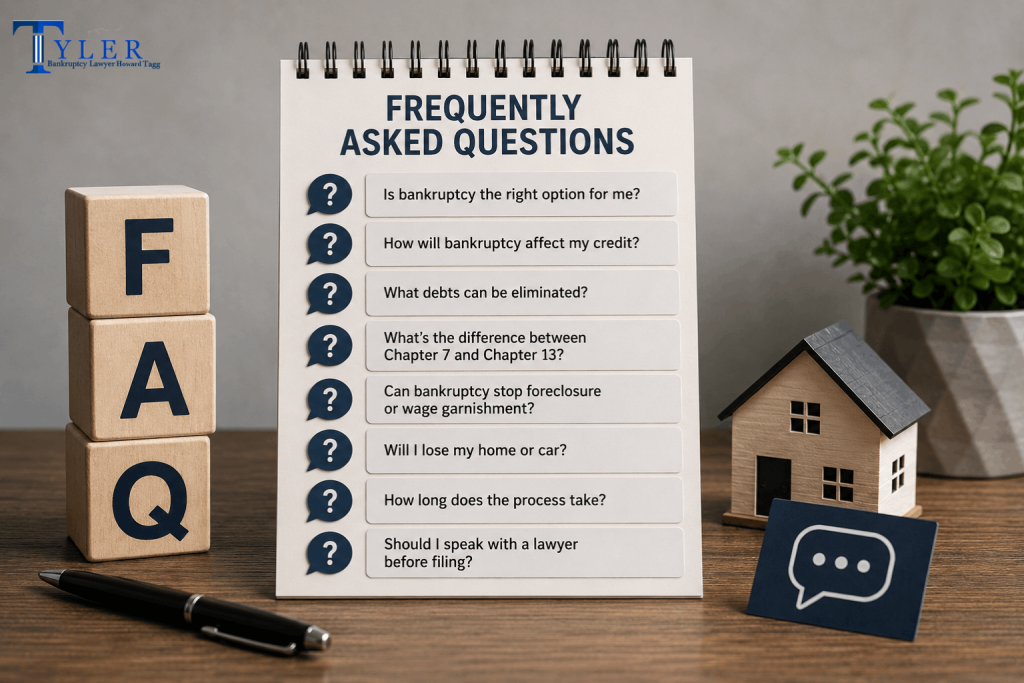
How do I know if bankruptcy may be the right option for me?
Bankruptcy may be worth considering if you are struggling to pay bills, facing foreclosure, dealing with wage garnishments, or relying on credit cards for basic living expenses. A consultation with a bankruptcy attorney can help determine whether filing is appropriate for your situation.
Will filing bankruptcy ruin my credit forever?
No. Bankruptcy will affect your credit, but many people begin rebuilding their credit sooner than expected. In some cases, filing bankruptcy may improve your financial stability faster than continuing to miss payments and accumulate debt.
What debts can be eliminated through Chapter 7 bankruptcy?
Chapter 7 bankruptcy may discharge unsecured debts such as credit card balances, medical bills, and personal loans. Certain debts like child support, most student loans, and some tax obligations may still remain.
What is the difference between Chapter 7 and Chapter 13 bankruptcy?
Chapter 7 focuses on eliminating qualifying debts, while Chapter 13 creates a repayment plan over several years. Chapter 13 is often used by individuals trying to stop foreclosure or catch up on secured debts like mortgage payments.
Can bankruptcy stop foreclosure or wage garnishment?
Yes. Filing bankruptcy may trigger an automatic stay, which can temporarily stop foreclosure proceedings, wage garnishments, repossessions, and collection lawsuits while your case is active.
Will I lose my home or car if I file bankruptcy in Texas?
Texas bankruptcy exemptions may protect certain property, including your home and vehicle, depending on your circumstances. An attorney can review your assets and explain what protections may apply.
How long does the bankruptcy process take?
Chapter 7 cases often take several months to complete, while Chapter 13 repayment plans typically last three to five years. The exact timeline depends on your financial situation and the type of bankruptcy filed.
Should I speak with a bankruptcy lawyer before filing?
Yes. Bankruptcy laws are complex, and filing errors can create serious problems. Speaking with a qualified bankruptcy attorney can help you understand your rights, evaluate your options, and avoid costly mistakes.